
Payment Decoded - NFC: The Technology Behind Tap-to-Pay
A Quiet Revolution in the Palm of Your Hand
You've probably used it without even thinking: a tap of your card, your phone, maybe even your watch, and payment is complete. That's NFC, or Near Field Communication, silently powering millions of transactions every day.
Originally designed for secure data exchange over short distances, NFC is now a cornerstone of modern payments. It turns smartphones and cards into contactless wallets, making in-store transactions faster, more hygienic, and more intuitive.
What is NFC and How Does it Work?
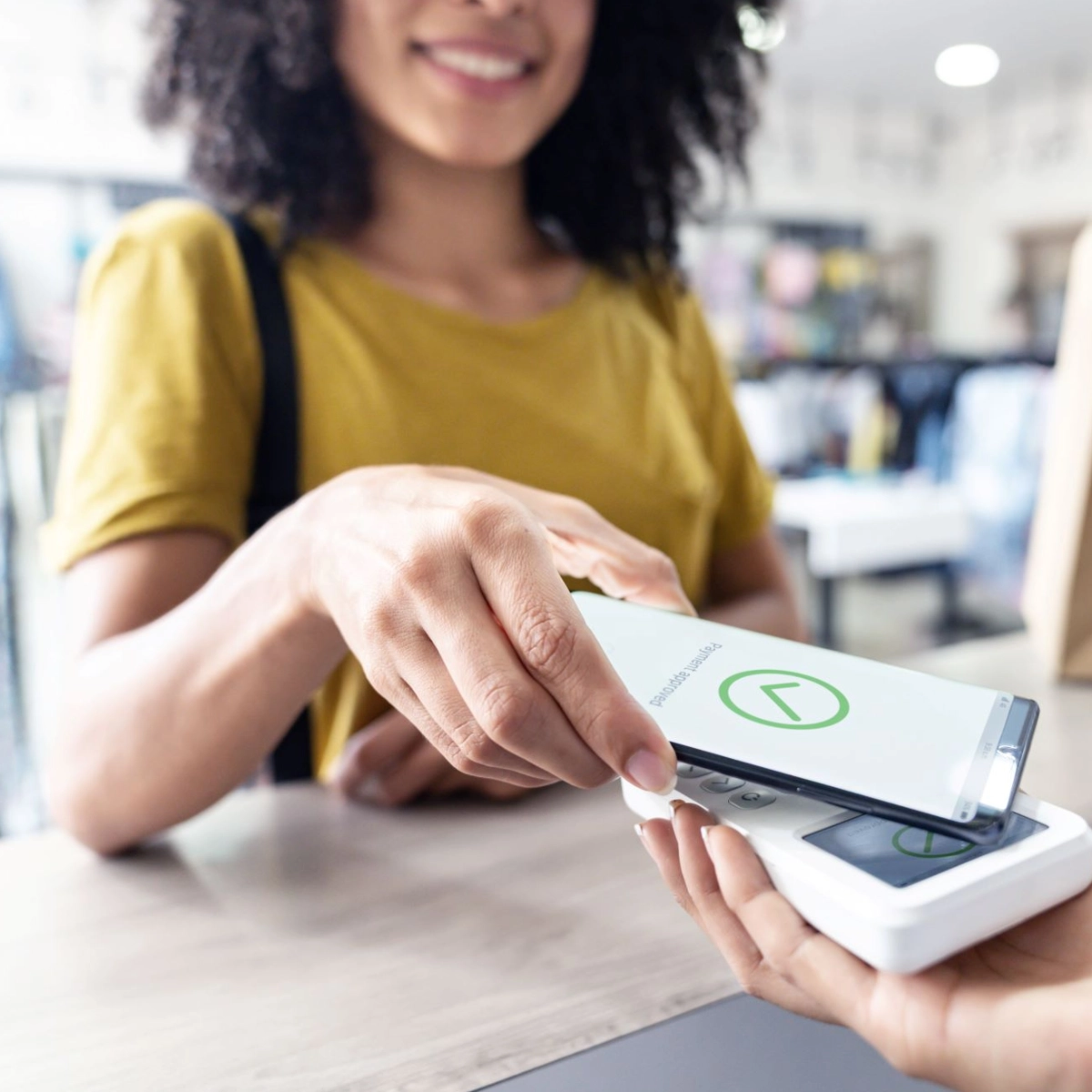
NFC allows two devices to exchange information when they are close together, typically within a few centimeters. In the context of payments, this means a customer can simply hold their contactless card or mobile wallet near a compatible terminal to complete a transaction.
-
A contactless-enabled card or device (like a phone or smartwatch) is brought close to the payment terminal.
-
Encrypted payment data is exchanged instantly via short-range radio signals.
-
The transaction is authorized through the card network (Visa, Mastercard, etc.), just like with a chip or swipe.
-
A receipt is issued, and the transaction is complete, typically in under a second.
For low-value transactions, there's no need to enter a PIN. For higher amounts, above €50 in Europe or £100 in UK, devices like smartphones often use biometric authentication (Face ID, fingerprint).

Are Contactless Payments Secure?
NFC may be convenient, but it's also built on serious security standards. Each transaction is uniquely encrypted and tokenized, meaning the actual card number is never exposed during payment. Instead, a one-time-use token is shared with the payment terminal, drastically reducing the risk of fraud.
This tokenization is not only essential forsecure transactions, it also enables value-added services like TFS (Tax Free Shopping). Because the original card data is protected, tokenized identifiers can be safely used to link purchases to a shopper's profile or passport information, helping merchants and refund operators offer seamless, compliant digital tax refunds.
Mobile wallets like Apple Pay and Google Pay add further protection through biometric authentication and device-specific security layers.
And because NFC works only at very short distances (a few centimeters), the risk of data interception or "skimming" by a third party is extremely low, making it a secure foundation for both payments and services like TFS.
A Global Shift in Customer Behavior
Adoption of contactless payments has accelerated worldwide. 60-70% of transactions are contactless in UK, and 50-58% in USA. In many countries, tapping to pay is now the default behavior for in-store purchases, driven by speed, hygiene, and ease of use.
Customers no longer think of it as a "new" technology. It's simply how they expect to pay, whether with a card, a phone, or even a wearable. For international travelers, contactless is also the most familiar and frictionless way to make payments abroad.
According to the European Central Bank, 53.8% of all card-based payments in the euro area were contactless in the second half of 2022. [1]
What NFC Technology Means for Merchants
For retailers and hospitality businesses, enabling NFC is about more than offering convenience. It's about staying relevant and unlocking future opportunities:


NFC has quietly reshaped how consumers interact with stores, hotels, and service providers. What was once a cutting-edge feature is now a baseline expectation. For forward-looking merchants, the future of in-store payments will be built on fast, contactless, and secure experiences, and that future is already here.
[1] Source :Contactless payments in the euro area - European Central Bank
[2] Source:85% Of Gen Z Prefers Digital Payments to Cash - PYMNTS
Get in touch
Let's connect and discover the ideal way that we can support your needs.


