
Payment Decoded - What is an Issuer and Why It Matters?
As a shopper, when you tap your card at a checkout counter, the transaction might seem instant — but behind the scenes, a complex chain of systems and institutions springs into action in less than a second. One of the most crucial players in this process is the Issuer.
Whether you’re making a purchase in-store, online, or abroad, the Issuer plays a central role in determining whether the transaction is approved, how it’s secured, and what benefits you receive.
What is an Issuer?
The Issuer (short for issuing bank) is the financial institution, often a traditional bank or a fintech, that provides consumers with payment cards. The Issuer is the entity that:
- Opens the accounts
- Issues physical or virtual card
- Sets the spending limit or credit line
- Manages the transactions, billing, and rewards
- And, crucially, authorizes or declines the payments in real time
The Issuer is directly linked to peoples’ bank account or credit line. When they pay, it decides whether to release funds based on their available balance, risk profile, and past activity.
It also takes responsibility for protecting them from fraud, managing disputes, and enabling digital features like contactless payments, 3D Secure authentication, or mobile wallet integration.
In essence, the Issuer is the gateway to the global payment network — giving shoppers access to merchants all over the world while keeping their finances secure.
How Issuers Fit Into the Payment Chain
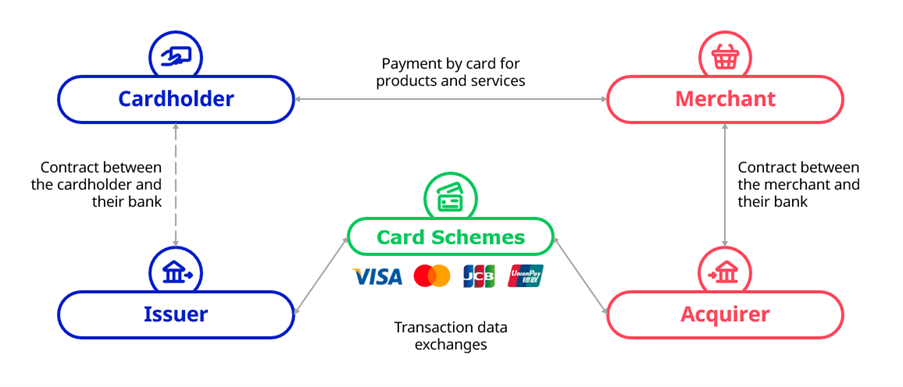
Each card transaction involves four main players — often visualized as the "four corners" of payments:
- Cardholder: The shopper who initiates the payment.
- Issuer: The cardholder’s bank, which approves or declines the transaction.
- Acquirer: The merchant’s bank or payment processor.
- Merchant: The business where the transaction takes place.
Here’s what happens in seconds:
- The cardholder taps or inserts their card.
- The request goes to the Acquirer, who passes it to the card network (Visa, Mastercard…).
- The Issuer verifies the transaction and authorizes it.
- The approval flows back to the merchant, completing the sale.
The Issuer is responsible for releasing the funds and securing the transaction — all in real time.

Why Issuers Matter for Shoppers
Issuers shape how consumers experience payments:
- Security & Authentication: They verify your identity and prevent fraud using tools like 3D Secure or biometrics.
- Fraud Protection: Suspicious transactions can be blocked instantly.
- Dispute Handling: Your Issuer helps you resolve chargebacks or refunds.
- Perks & Rewards: Many cards offer cashback, loyalty points, travel insurance, or purchase protection.
- Card Management: Tools like virtual cards, budgeting, and alerts come from the Issuer’s platform.

Why Issuers Matter for Merchants
Merchants may never interact with the Issuer directly, but its role still matters:
- Instant Authorization: Faster approvals mean less friction at checkout.
- Reduced Risk: Fraud screening on the Issuer side lowers chargeback potential.
- Customer Trust: Shoppers are more likely to buy when their trusted bank supports the transaction.
- Seamless Experience: A reliable Issuer leads to smoother and faster transactions.
The Issuer is more than just peoples’ bank: it's the engine behind every card payment. From security to approval and customer benefits, it ensures that payments happen smoothly, anywhere in the world.
FAQ — Things to Know About Issuers
No. Visa and Mastercard are card networks. The Issuer is your bank or fintech.
The Issuer will decline the payment or allow it on credit if applicable.
Yes — for suspected fraud, unusual activity, or upon your request.
Get in touch
Let's connect and discover the ideal way that we can support your needs.


